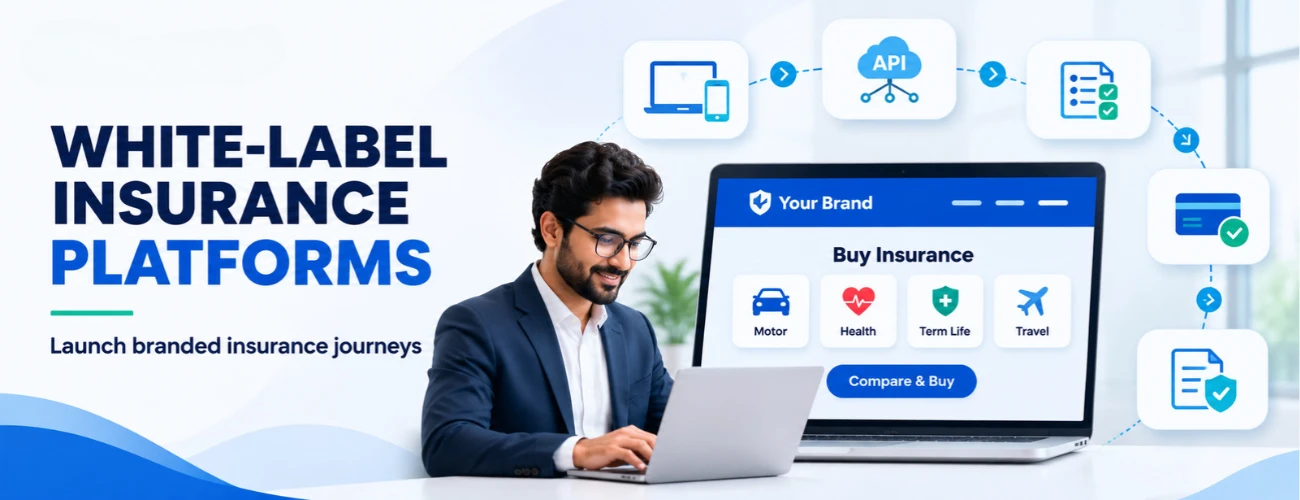
- Launch Without Building from Scratch: A white-label insurance platform provides ready-to-configure technology so businesses can offer insurance without developing every component independently.
- API-Led Insurer Connectivity: Insurer API integrations combine quotations, policy comparisons, payments, and issuance within one connected customer journey.
- Stay Under Your Brand: Banks, fintechs, brokers, and NBFCs can grow insurance distribution while maintaining their own customer-facing identity.
Why Companies Choose Branded Insurance Journeys
Think of a customer using a fintech app to manage their money. They want to purchase health or motor insurance but need to go to another website to complete the transaction. The customer has to re-enter their details, compare policies, and purchase on an unknown platform.
This creates a gap in the customer experience for the fintech and a lack of visibility into the insurance journey. A white-label insurance platform solves this. Instead of directing customers to a third-party insurance marketplace, companies can build insurance journeys within their own branded digital properties.
The tech provider runs the underlying software infrastructure, but the business keeps its customer-facing identity. For insurance distributors, the opportunity is more than just another product — it creates a digital channel where insurance sales, customer relations, and operational information stay connected.
What is a White-Label Insurance Platform?
A white-label insurance platform is ready-to-configure insurance technology that allows businesses to offer branded digital insurance purchase and servicing journeys. It connects the customer-facing interface with insurer products, quotations, proposal processing, payments, and policy issuance.
The business can configure supported branding elements and customer workflows without developing every insurance component from scratch. For instance, an authorised insurance broker can set up a branded website where customers compare motor insurance policies and make a purchase — with the software connecting the broker's digital channel to supported insurer systems.
"White labeling alters the presentation and delivery of insurance services. It does not make the business an insurer or replace the authorisation required for insurance distribution. The insurer continues to underwrite and issue its policies."
How Does a White-Label Insurance Platform Work?
A branded insurance journey connects the customer interface with the technology and insurer systems behind it. The process typically involves the following stages:
| Stage | How the Platform Supports the Journey |
|---|---|
| 1. Customer Entry | Customers access insurance through the business's branded website or app. |
| 2. Product Selection | Available insurance categories and suitable product options are displayed. |
| 3. Quote Generation | APIs retrieve quotations from supported insurers in real time. |
| 4. Policy Comparison | Customers review premiums, coverage, and applicable policy conditions. |
| 5. Proposal & Payment | Customer information moves into the relevant proposal and approved payment workflows. |
| 6. Policy Issuance | The insurer processes eligible proposals and returns issuance confirmation. |
| 7. Post-Sale Servicing | Supported policy documents, renewals, and service requests remain accessible. |
Why Businesses Need White-Label Insurance Software
Building an insurance platform is much more than creating a website. Businesses need insurer integrations, quotation engines, proposal workflows, payment connectivity, policy records, and servicing capabilities.
Building and maintaining these systems individually requires substantial technology effort. White-label insurance software provides a ready-made base that businesses can customize to meet their distribution needs — freeing internal teams to focus on product selection, customer acquisition, and operational readiness.
Customers who already use your digital platform should recognise your brand throughout the insurance purchase process. A white-labelled solution can support your logo, interface design, and configured purchase journey.
For example, a broker can provide a branded motor insurance comparison experience rather than redirecting customers to unrelated portals. Where applicable, the identity of the insurer, policy terms, and required disclosures must remain visible.
Disconnected insurance journeys make it difficult to track incomplete purchases, issued policies, and follow-up requirements. A connected platform brings supported customer, quotation, proposal, and policy information into one operational view.
This gives authorised teams increased visibility into sales activity and servicing requirements, and helps businesses see where customers are dropping off in their purchase journey or need additional support.
6 Must-Have Features of a White-Label Insurance Platform
The value of a platform is what it can run under the branded interface.
Branding is more than placing a company logo on a third-party page. Businesses should be able to configure supported customer journeys, product displays, and communication touchpoints on the platform.
A broker selling motor insurance may need a comparison-focused interface. A lender may require a simpler protection offer within its loan process.
- What to look for: Will the platform support your customer journey without extensive redevelopment?
Insurance distributors typically work with several insurers offering a range of products and coverage options. Managing separate insurer integrations makes the technology environment difficult to maintain.
A white-label insurance platform should connect supported insurer APIs for quotations, proposal processing, issuance, and policy information.
- What to check: Which insurers and transaction types are live, and what further integration work needs to be done?
A branded interface alone cannot deliver the full insurance purchase experience. Customers also need access to suitable insurance options, clear policy information, and a working purchase process. The platform should link quotation retrieval, appropriate comparisons, proposal validation, and insurer-confirmed issuance.
- What to check: Can customers purchase supported insurance through the configured digital journey end to end?
FT D2C Insure by FondosTech connects insurer quotations, product comparisons, proposal workflows, and policy issuance within a single configured branded journey — ready to deploy on a business's own website or app.
Payment problems can disrupt otherwise completed insurance proposals. The platform should support insurer-approved payment journeys relevant to the need and provide visibility into the status of transactions.
Reconciliation capabilities help tie together relevant payment, policy, and insurer records for distributors. Operations teams should be able to identify failed payments, unmatched transactions, and pending issuance requests.
FT PayIn-PayOut and FT Reconciliation connect premium payment workflows to policy proposals and reconcile insurer payment records, providing end-to-end financial visibility for insurance distributors.
The customer relationship extends well beyond policy issuance. Customers may need policy documents, renewal notices, servicing information, or help with claims.
Connected servicing workflows enable distributors to perform these activities without switching between disconnected applications.
- What to check: What servicing and renewal capabilities are available from your chosen insurers and products?
Businesses need to understand how their branded insurance channel performs. Useful reporting includes quotations generated, proposals submitted, issued policies, conversion rates, and pending transactions.
AI-assisted capabilities may also support policy matching, purchase-intent analysis, and identifying information that requires review.
- What to look for: Actionable reporting that adheres to insurer rules and supports operational oversight.
How FondosTech Supports White-Labelled Insurance Journeys
FondosTech provides API-led insurance distribution technology for brokers, banks, NBFCs, fintechs, and other authorised distributors. Its FT D2C Insure solution helps businesses offer insurance through branded websites and digital applications.
The platform connects supported insurer quotations, product comparisons, purchase workflows, and policy issuance within a configured customer journey. It also provides a central view into customer and policy activity, with selected AI-assisted capabilities that support digital insurance sales.
- For businesses offering insurance during other transactions, FT Embedded Insure supports relevant purchase and loan-linked workflows.
- Rather than building each insurer connection and sales process independently, distributors can use existing technology infrastructure adapted to their operating requirements.
- Available insurers, products, integrations, and implementation options depend on the selected solution and distribution model.
Branded insurance purchase journeys on your own website or app — with connected insurer APIs, comparison tools, and digital policy issuance.
Embed relevant insurance coverage directly into existing customer transactions — at checkout, loan disbursal, or digital onboarding.
Tie together payment, policy, and insurer records automatically — with visibility into unmatched transactions and failed issuance.
Manage POSP onboarding, multi-insurer quotations, and digital policy issuance across a large agent distribution network.
Frequently Asked Questions (FAQs)
A white-label insurance platform allows authorised businesses to offer branded insurance purchase and servicing journeys using existing insurance technology infrastructure — without building every insurer integration, quotation engine, or proposal workflow independently.
FondosTech creates partner-branded insurance journeys with configurable customer interfaces and connected insurer workflows through its FT D2C Insure and FT Embedded Insure solutions. These connect quotations, comparisons, proposals, payments, and policy issuance within one configured platform.
White-label insurance is about branding — a business offers insurance under its own identity using a configured platform. Embedded insurance is about placement — relevant coverage is inserted into another customer transaction or purchase journey, such as a loan application or e-commerce checkout.
Review branding configuration options, working insurer APIs, end-to-end quote and issuance workflows, payment integration, compliance controls, post-sale servicing capabilities, and actionable reporting. The number of live, fully functional insurer integrations matters more than the total number of claimed connections.
Authorised insurance distributors — including IRDAI-licensed brokers, banks, NBFCs, corporate agents, and registered fintechs — can use white-label insurance platforms to distribute insurance products under their own brand through digital channels.