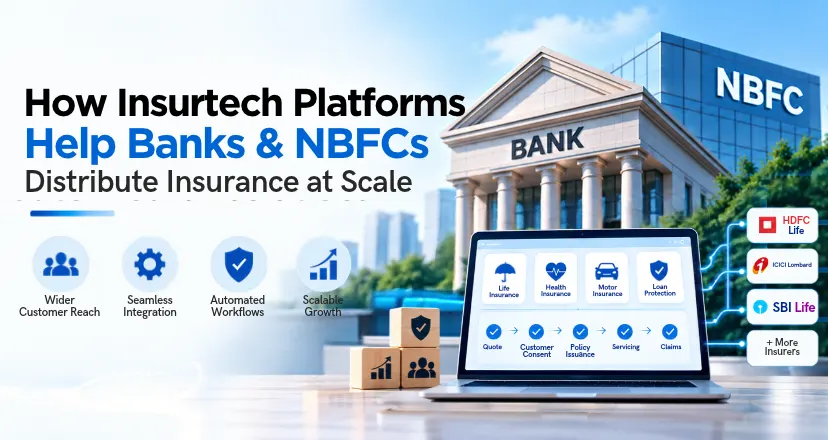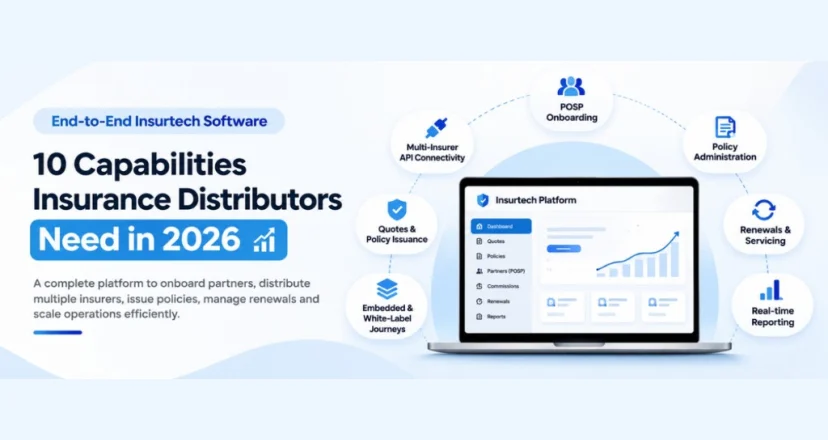
- Unified Platform: POSP management software combines agent onboarding, insurer quotations, proposal submission and policy issuance into one connected platform.
- Automation First: Multi-insurer APIs, automated validation, and connected payment workflows cut down on manual work and delays in policy issuance.
- Operational Control: The right software helps you stay compliant with regulations, manage commissions, renewals, and track network performance.
Why POSP Management Software is Needed for Insurance Distributors
An insurance broker managing hundreds of Point of Sales Persons (POSPs) needs more than a basic agent portal. To sell any policy involves a number of steps: taking customer details, comparing quotes, taking payment, and issuing policies.
POSPs spend more time managing processes than selling insurance when these activities occur across multiple insurer portals. This is especially true given the size of India's POSP distribution network.
The challenge for brokers and corporate agents is not just to onboard more POSPs. It is assisting existing POSPs in issuing policies efficiently and retaining operational control. Here is where POSP management software comes in handy. However, not every platform offers the same capabilities. It's important to know which features impact the speed of policy issuance and the efficiency of distribution when choosing the right solution.
What is POSP Management Software?
POSP management software is a digital platform that helps authorized insurance distributors onboard, manage, and monitor Point of Sales Persons across the entire insurance sales lifecycle.
The software may support, depending on its capabilities:
Registration, training records, and eligibility documentation for each POSP in one system.
Compare and issue policies across multiple insurer APIs from a single interface.
Centralize customer records, follow-ups, and policy history in one connected CRM.
Automated commission reconciliation, calculation, and policy renewal tracking.
A POSP platform is different from a general CRM as it supports insurance-specific processes and insurer integrations. A connected POSP platform allows the distributor to manage quotation and policy issuance journeys from one interface—reducing repeated data entry, portal switching, and manual coordination.
9 Features to Look For in POSP Management Software
Onboarding POSPs involves several steps—from document collection and training to credential verification and authorization. Manually managing these activities can mean endless follow-ups, paperwork, and multiple spreadsheets.
A POSP management platform simplifies onboarding by having registration, document collection, training records, and approvals in one system. It allows operations teams to see each application and what needs to be done before a POSP can begin selling insurance.
- How it helps: Reduces paperwork, avoids repeated follow-ups, and helps operations teams activate eligible POSPs faster.
- What to look for: A platform that records each POSP's registration, documents, training, certification, and approval status.
FT POSP Sure by FondosTech provides end-to-end digital onboarding, training record management, and IRDAI-compliant certification tracking for insurance brokers managing large POSP networks.
POSPs might find it cumbersome to manage multiple insurer portals. They may have to log into different systems to create quotes, submit proposals, check payments, or download policies. This can drag the sales process, particularly when multiple customers are involved.
Multi-insurer API integration enables supported insurer services within a single platform. POSPs can view quotations, submit proposals, and monitor policy issuance without switching between portals repeatedly. It also gives distributors better visibility of transactions across their insurer network.
- How it helps: Less portal switching, repetitive data entry, and time managing insurer transactions.
- What to look for: See which insurer APIs are live and whether they support quotation, proposal, payment, policy issuance, and servicing.
A platform with fewer fully functional insurer integrations may be more useful than a platform with many integrations that provide limited functionality.
Customers rarely make insurance decisions based on premiums alone. They also want to understand coverage, exclusions, add-ons, and other policy conditions before making a purchase.
Comparing choices is time consuming when POSPs gather quotes individually from various insurer websites. This process is made easy with a POSP management platform that has integrated quotation comparison. It enables POSPs to view available insurance products, compare relevant coverage details, and explain suitable options to customers.
- How it helps: Speeds up quote comparisons and helps POSPs answer customer questions without unnecessary delays.
- What to look for: Real-time or close to real-time quotes from insurers, apples-to-apples comparisons of coverage, and insight into relevant policy conditions.
POSPs get inquiries from various sources such as referrals, digital advertising, existing clients, and policy renewals. Tracking leads becomes difficult when client data is spread across spreadsheets, emails, and messaging apps.
A centralized lead management system provides a single place for POSPs to manage policy requirements, customer information, past exchanges, and follow-up tasks. Managers can also see follow-up possibilities and pending leads.
- How it helps: POSPs follow up on inquiries more efficiently and reduce time spent searching for client information.
- What to look for: A platform that connects client records to quotes, proposals, issued policies, and follow-up actions.
Entering the same customer details multiple times is one of the avoidable delays in insurance sales. A POSP may collect customer information while generating a quotation, only to enter it again during proposal submission. Apart from consuming time, repeated data entry increases the chances of mistakes.
Automated proposal forms carry relevant customer information from the quotation stage into the proposal. The software should also allow digital document uploads and verification through authorised services where available. For example, supported motor insurance workflows may get verified vehicle details and populate the relevant proposal fields.
- How it helps: Reduces avoidable errors, reduces repetitive data entry, and makes proposal submission quicker.
- What to look for: Pre-filled proposal forms, digital document uploads, and re-use of verified customer information.
A small mistake in a proposal can stop the whole policy issuing process. Incorrect vehicle details, missing customer information, or incomplete documentation may lead to rejection or further checks.
POSP management software needs to catch these issues before the proposal reaches the insurer. Automated checks can verify missing fields, confirm the right documents are included, and apply the relevant product eligibility conditions. It should also prevent POSPs from accessing insurance products for which they do not have a distribution license.
- How it helps: Spots mistakes early and cuts down on proposal rework, rejections, and needless processing delays.
- What to look for: Configurable validation rules, clear error messages, and checks that meet insurer requirements and applicable regulations.
Not every insurance application will go directly from submission to policy issuance. In some instances, the insurer requires further documentation, clarification, or additional review. When these are processed through separate emails and phone calls, POSPs may not understand what is holding up a proposal.
A connected platform should display the existing proposal status, outstanding requirements, and insurer responses. POSPs and operations teams can then quickly find cases that need attention. Where available, AI-assisted features can also help to categorise information or flag incomplete cases.
- What it does: Provides more visibility into pending cases and helps teams meet outstanding requirements without needless follow-ups.
- What to look for: Clear proposal status tracking, exception alerts, and a differentiation between straight-through processing and cases requiring further review.
FT POSP Sure provides connected underwriting status tracking and exception management, giving distributors real-time visibility into every proposal across their insurer network.
Payment issues can delay the issuance of a policy even after a proposal has been completed. For example, a customer may make a payment, but the POSP may not know immediately if the transaction was successful or acknowledged by the insurer.
A POSP management platform should connect the proposal with the applicable insurer-approved payment process. It should display payment status, transaction references, and insurer acknowledgements wherever supported. Failed or pending transactions should be easy to identify so operations teams don't have to manually tie payment records to proposals.
- How it helps: Makes it easier to track payments and lets teams see failed or pending transactions more quickly.
- What to look for: Connected payment status, transaction tracking, and visibility into payment exceptions and insurer acknowledgments.
Note: Successful payment does not guarantee the policy has been issued. The insurer will confirm issuance of the policy upon completion of the applicable requirements.
FT PayIn-PayOut connects premium payment workflows directly to policy proposals, providing real-time transaction status and insurer acknowledgement tracking across the full POSP distribution network.
Customers expect to receive their insurance documents promptly after they buy insurance. But routine transactions can take additional time as POSPs need to log into different insurer portals to check issuance status and download policies.
A connected POSP platform should allow authorised users to access policy documents and view relevant policy information through a single interface. It may include the policy number, insured details, issuance date, and available documents. The system should also display pending or unsuccessful issuance requests so that teams know what transactions require attention.
- How it helps: Reduces manual tracking of policies and makes it easier for POSPs to get and share copies of issued policy documents.
- What to look for: Policy issuance tied to insurer, document retrieval, policy status tracking, and visibility into failed transactions.
Beware of any vendor who promises instantaneous issuance of any insurance product. The time it takes to process depends on the insurer's systems, the underwriting requirements, and the rules specific to the product.
How to Choose the Right POSP Management Platform
Insurance brokers and corporate agents who want to scale their POSP networks should look for a platform that integrates key distribution activities while maintaining compliance and operational control. Use the checklist below when evaluating vendors:
| Feature Area | What to Check | Why it Matters |
|---|---|---|
| Insurer API Integrations | Live & Fully Functional | Fewer functional integrations beat many partial ones for daily usability |
| POSP Onboarding Workflow | Digital & End-to-End | Speeds up activation and reduces operations team workload |
| Proposal Automation | Pre-fill & Validation | Eliminates duplicate data entry and reduces rejection rates |
| Compliance Controls | IRDAI-Aligned Rules | Prevents unauthorized product access and maintains audit trails |
| Scalability & Support | Multi-POSP Network Ready | Platform must handle growing agent counts without performance degradation |
Conclusion
The right POSP management software can be a game-changer for insurance distributors managing sales and policy issuance processes. Multi-insurer API integration, automated proposal forms, digital payments, and real-time policy tracking are the core features that help reduce manual work and processing delays.
Insurance brokers and corporate agents who want to scale their POSP networks should look for a platform that integrates key distribution activities while bringing in compliance and operational control.
FondosTech's FT POSP Sure allows distributors to manage onboarding, quotations, policy issuance, commissions, and renewals all on a single connected platform. With API-led insurer integration and AI-assisted capabilities, it empowers teams to work more effectively and support business growth across India's expanding POSP distribution network.
Frequently Asked Questions (FAQs)
POSP management software helps insurance distributors manage agent onboarding, quotations, policy issuance, commissions, and renewals in a single digital platform. It is different from a general CRM as it supports insurance-specific workflows and direct insurer integrations.
It removes manual work through API integrations with insurers, automated proposal forms, data validation, and digital policy processing—eliminating the need for POSPs to log into multiple insurer portals for each transaction.
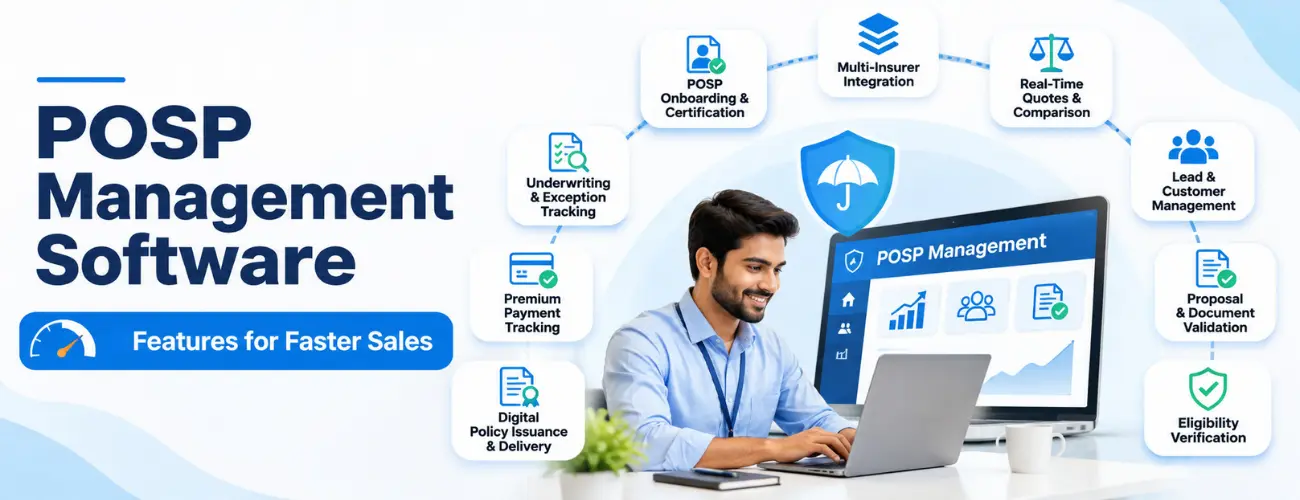
Key features include multi-insurer API integration, digital POSP onboarding, real-time quote comparison, automated proposal forms, eligibility verification, premium payment tracking, underwriting exception management, and digital policy issuance with document delivery.
Yes. API-enabled POSP platforms connect to supported insurers to manage quotations, proposals, and policy issuance from one interface. The quality of the integration matters—look for platforms with fully functional, live insurer APIs rather than those offering partial connectivity.
Compare live insurer integrations and policy issuance capabilities, compliance controls, ease of use, scalability, and implementation support. Platforms should demonstrate working connections to the insurers your POSP network actively distributes for.